
Listening is touted as one of the most important, if not the most important, communication skill. Rightly so. It is through listening that we truly understand and empathise with the intent behind what is being communicated.
As much as communication is often associated with the sender, I have always believed that the true value of communication lies in the receiving. It is in the act of receiving that communication can be improved. The sender needs the receiver to validate what has been communicated so that the sender’s intent is understood. Job done.
As the saying goes, “It takes only one party to improve a communication.” In my opinion, that one party is usually the receiver—the listener.
To this end, the science and art of listening is indeed a crucial competency for any individual, be it a parent, a friend, a peer, a leader, a team member, and so on. Therefore, it is no surprise that many learning and development initiatives incorporate listening as a critical skill to be acquired.
As a people developer, I have been involved in the design and deployment of such initiatives through leadership development programs, entrepreneur accelerators, start-up incubators, and stand-alone workshops. At the beginning of my career, my approach to listening was relatively straightforward. I taught what I now consider the most basic dimension of listening: How To Listen.
I used the acronym E.A.R.
E – Eye Contact
A – Attention
R – Respond
Over time, I modified the model by adding another element: S – Suspension of Judgement.
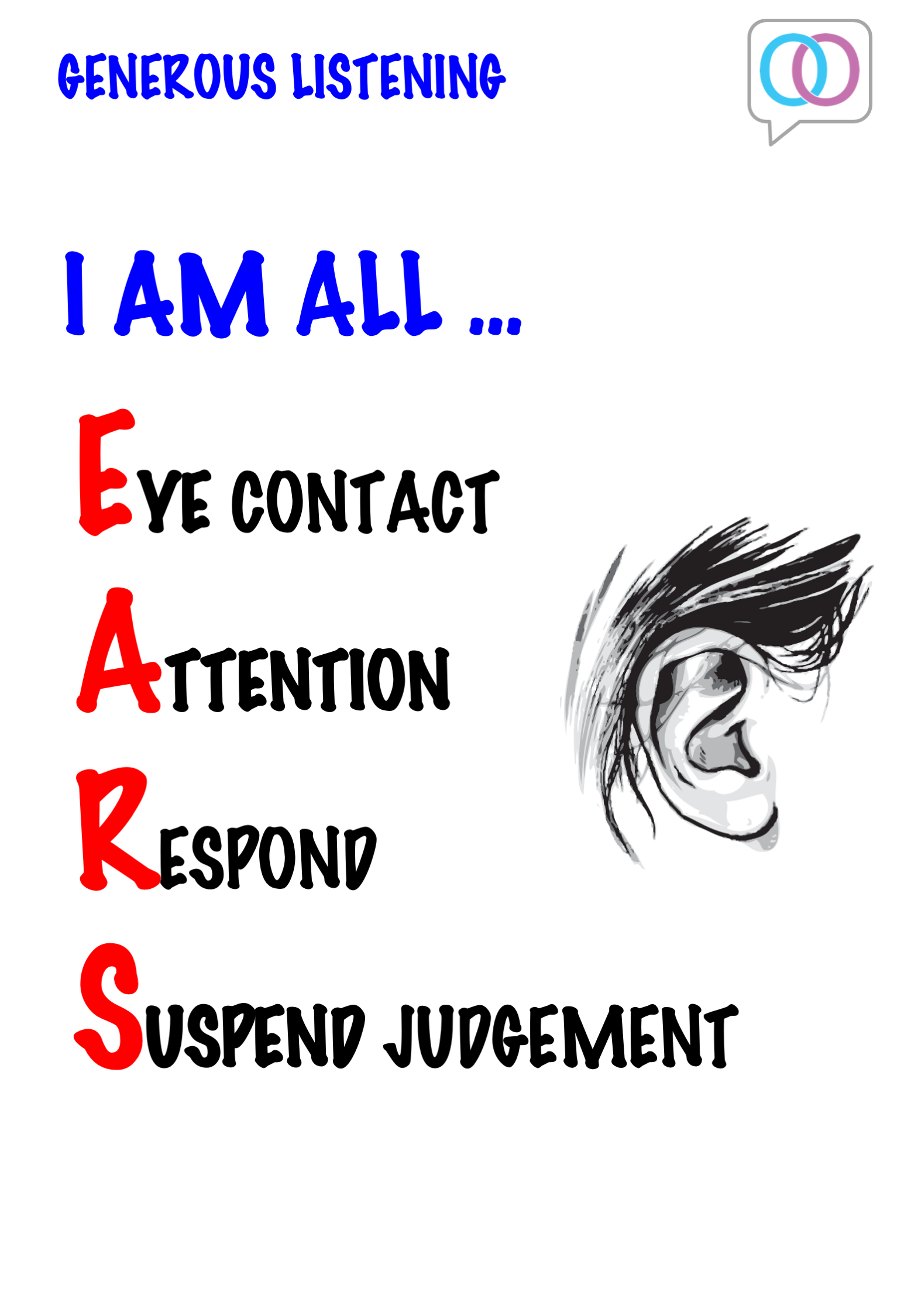
This addition appealed to me because I had always struggled with teaching listening without addressing what I believed to be one of its biggest barriers—our internal radio. This internal radio constantly judges, evaluates, criticises, compares, and interprets what we are hearing. The S in E.A.R.S is a discipline linked to the Ladder of Inference.
For a long time, this model served me well.
However, in my pursuit of becoming a better learner and listener, I realised that knowing How To Listen still falls short of being truly effective.
I found myself asking:
“Yes, I am listening. I maintain eye contact. I give attention. I respond appropriately. I suspend judgement. Yet why do I still sometimes fail to fully understand what is being communicated?”
This led me to another question.
Not just How am I listening?
But also: What am I listening to?
This question eventually led me to introduce a second module to complement E.A.R.S.
If E.A.R.S was about How To Listen, this new module focused on What To Listen To.
In this module, I encourage listeners to pay attention to three dimensions of communication:
- The Facts being communicated.
- The Feelings being communicated.
- The Purpose behind the communication.
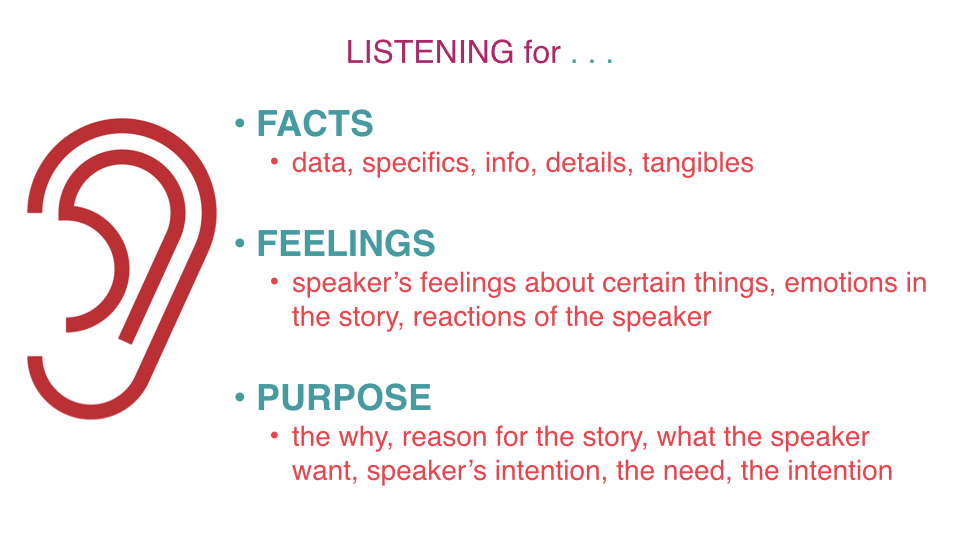
Listening to facts helps us understand information.
Listening to feelings helps us understand emotions.
Listening to purpose helps us understand intent.
Together, these three dimensions deepen both understanding and empathy.
Remember the internal radio that gets in the way of listening? It is also the same internal radio that processes the facts, feelings, and purpose that we hear. Therefore, one practice we highly encourage listeners to adopt is validation. Rather than assuming understanding, we check our understanding.
For many years, these two modules—How To Listen and What To Listen To—were sufficient. They appeased my restless pursuit of becoming a better listener. Yet, at the back of my mind, something still felt incomplete.
Based on my own observations and experiences, I had met individuals who knew how to listen. I had met individuals who knew what to listen for. Yet some of them were still not particularly effective listeners.
Why?
This question continued to linger. Eventually, it led me to a third dimension of listening: The Being dimension.
This discovery made immediate sense to me because it aligned with a concept that I have championed for decades: the BE-DO-HAVE Model.
In the BE-DO-HAVE model, we believe that every result we seek (the HAVE) requires two things: Action (the DO) and Attitude (the BE).
A simpler way of expressing this is: Attitude + Action = Result (A + A = R)
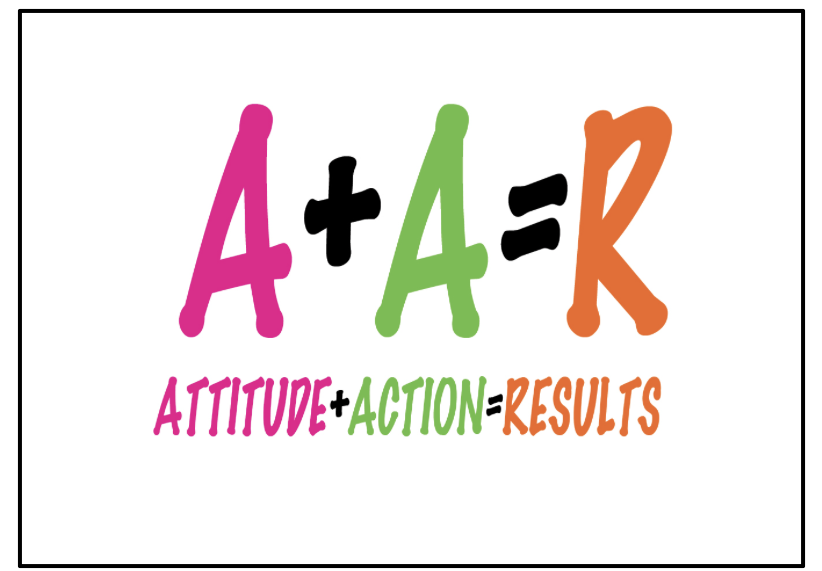
Action alone is rarely enough. The same action performed with different attitudes often produces different results.
Therefore, if effective listening is the result we seek, then knowing How To Listen and What To Listen To addresses the action component.
But what about the attitude component? What must we BE in order to become effective listeners?
This question led me to identify three BEings that I believe make listening more effective.
BEing #1:
I Am The Least Interesting Person In This Conversation
As the listener, I am the least interesting and least important person between us. This point of view immediately shifts the spotlight away from me and onto the other person. It naturally makes me more attentive, more curious, and more present.
It also reduces my urge to interrupt, compare experiences, or redirect the conversation back to myself.
BEing #2: Listening Is A Gift
This listening that I am doing is a gift. As I listen, I am giving.
This attitude induces gentleness, appreciation, patience, and empathy. It reminds me that this moment is not about me. It is about creating space for another person to be heard.
BEing #3: I Am A Safe & Secure Vault
I am a safe and secure vault; a secure space where thoughts, emotions, concerns, and aspirations can be expressed without fear.
This attitude allows me to create a space that is non-judgemental, accepting, and trustworthy. People do not merely need someone to hear them. Often, they need someone who can safely hold what they have to say.
As I reflect on my own journey, I realise that my pursuit of listening has evolved through three dimensions:
| Dimension | Question | Focus |
| HOW | How do I listen? | Behaviour |
| WHAT | What am I listening to? | Content |
| BEING | Who am I while listening? | Attitude |
Together, these dimensions shape the quality of our listening. For many years, I thought listening was primarily about technique. Then I realised it was also about attention.
Later, I discovered it was about understanding. Today, I believe it goes even deeper.
The quality of our listening is ultimately determined not only by what we do, or what we listen for, but by the person we choose to be while listening.
And perhaps that is why listening remains a pursuit rather than a destination.
My Own Reflection After Writing This
My favourite part of this article is actually the table near the end. It gives the readers a moment of synthesis and helps them see that this is not merely a reflection but a model emerging from years of practice: HOW → WHAT → BEING or in another ‘language’: DO → DO → BE → HAVE
I suspect this article may become the seed of a larger model on listening, much like how other practitioners design their frameworks; started as reflective observations before maturing into teachable concepts.
A Reflective Question for You My Dear Readers
If a person masters the techniques of listening but fails to create safety, have they truly listened?
Or have they merely heard well?
 akar setempat, akal sejagat