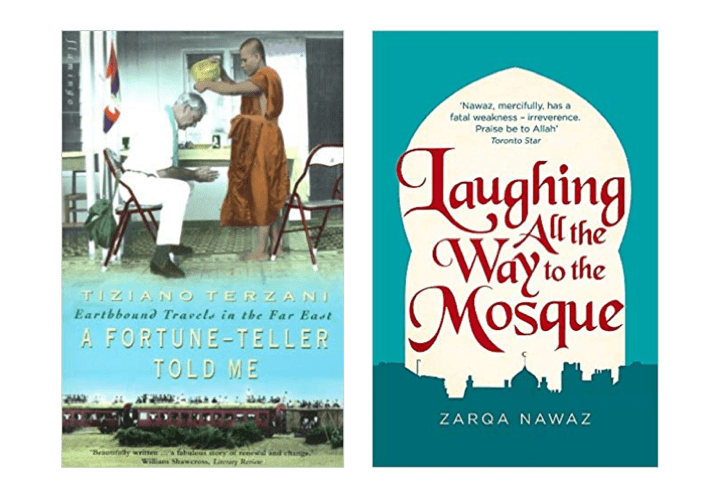
Two book by two journalist ocean apart discussing the same context of self-discovery through reflection and a dose of self-laughing.
Faith is more than just believing in something or someone. We know how faith feels and live in our body. We also know what it feels like when faith abandon us.
The common question about faith is how do we cultivate it. This is as famous a question as the one that asks how do we build trust; in ourself or in others or in others to us.
The question on how to build trust has been answered for me but the one on faith has eluded me so far… until now.
I recently read a book titled “Laughing All the Way to the Mosque”; a quaint ‘little’book by a Canadian Muslim journalist by the name of Zarqa Nawaz. Btw, this book was given to me by a dear childhood little sister-friend by the name of Nik Sunita (or Intan as she is to me). What a wonderful easy to read, funny and thought provoking little tale right with up there with the best of its kind of genre like Tiziano Terzani’s “A Fortune-Teller Told Me”; another journalist but Italian. Hmmm, now that I made that connection, i wonder if journalist writes the best stories compared to novelist? Ok. Enough of my rambling.
In Zarqa’s book, there was one passage that gives me a part of the answer to the question about cultivating faith. I admit it is not a full answer yet, for me, but a good one to start my quest.
In the book she wrote, “Having faith is more than just believing; it is about living with fear and self-doubt and working through those feelings until they bring some sort of answer.”
That is how she thinks faith can be cultivated.
As I admitted earlier, I don’t think this is the whole answer I am looking for yet I think there is a lot of truth in what she says. I will take it for a test drive and maybe by doing so, in the journey of testing it out, an answer I am truly satisfied with will emerge. I have faith that it will.
As I move into my 50’s (and my 30th year as an entrepreneur), some things in life I have concluded as truths due to my own experiences and observation. One of this is the ability of letting go which to me is as important as the ability to embrace; be it opportunity or challenges.
When I was younger, with the vigour of youth, invincibility and energy, I focus on ‘pulling’ as many opportunities I can get in order to get as much a chance as possible. Therefore, drawing in opportunity and grabbing it become one and the same. It was never distinct; both are mutually inclusive. The truth is that both are mutually exclusive because there is also the choice of letting go of the opportunity/challenge that comes. Just because we cause it to come doesn’t mean we do not have a choice of what to do with it. Consider letting come as the picker and letting go or embracing it as the sorter. We need the ability to let come so that we have options to embrace or let go.
For me, the skills or let come and the ability is not embrace is easier compared to the ability to let go which is a harder being to develop because as a human being, our ‘default’ mode is scarcity which eventually crystallise into fear; what if this is the only opportunity? This might be the only time! etc, etc, etc. Therefore, in order for us to be able to let go, the most important criteria is … FAITH; complete trust or confidence that it will work out.
How do we built FAITH? Well, that would be whole new article 😉
So critiques might equate letting go as giving up. Well, it is a fine line in my perspective. For me, there are two ways to see if it is letting go or giving up. The first one is where the choice is made. If the choice is made before any action is taken, then it can’t be giving up because the word giving denotes we have it in our possession which in this case we have not. The second instance is a bit trickier. What is we have taken possession of the opportunity or challenge and along the way we decides to drop it (let it go or give it up). Well, in this instance, it is giving up… if, the energy we have around the drop is of a victim and not of empowered.
In conclusion, the ability to let come is just the first phase. Once it comes, we do need to choose to embrace it or to let it go. Both are genuine choices that you can make. So feel free to let go for you have the sole right to do so.
Life little recipes does require pinches of many things.
As I deny me, I deny others… how selfish can I be. -RJ-
Humbleness is a quality of being modest or unpretentious. Your humbleness is what keeps you from bragging about yourself; you ability, you plus points, your talent. -urban dictionary-
True humbleness is characterised by humility and a certain quietness or reservation. Showing off, exaggerating our accomplishments, and refusing to listen to other people’s advice and opinions are all the opposite of humbleness. Sometimes it is also used to mean an ordinary or lowly state: “The humbleness of her upbringing made paying for college a struggle.” I has a levelling down or neutralising effect.
Based on common wisdom plus the official dictionary definition, we treat humbleness as a virtue ad rightly so. We strive to be humble, we remind ourself to stay humble, we admire humbleness and we even instil humbleness to our children. The opposite is true too. We despise people showing off and arrogance. We find it distasteful to be saying about our accomplishments even. So, we shy away from doing so. I reprimand ourself if he realised we are not being humble. We frown on anything that is opposite to humbleness.
Herein lies the slippery slope that brings us to selfishness which we are unaware creeps in as we practice humbleness to a fault. As we carry this desire to be humble, we inadvertently start denying our greatness for fear the acknowledgement in itself is an act of arrogance. Once we do this, we lose sight of what we possess that can be of contribution to others. Self doubting if we are ever good at anything, worthy of anything to give to others creeps in until a point where we hide our gems. We become a recluse to our own greatness thus robbing the world and humanity a piece of our contribution. I that light, we become selfish in the most ‘humble’ of ways!
Don’t get me wrong. It is great to be humble. I dread the result of a person devoid of humbleness. The same is true for a person whose humbleness is carried to an extreme where reality and pride disappears.
So what is the answer to this? Unfortunately (or is it fortunately) there is no answer that will satisfy us even though we know it is a balancing act. Or maybe that is the answer; A Balancing Act.
Humbleness mixed with reality and a pinch of self-pride. Sounds like a recipe worth trying.
What is actually the foundation of a business and how do you actually build solid one?
“One most forgotten open secret is that investors invest in the business owner first and foremost, only then look at the business potential. The business owners need to demonstrate they know the business, its financial indicators, the market, their money making model etc. And, most importantly, the attitude of the business owner.” -Zack Amin-
I believe there are two ways to build a business; build to last or build to sell. Building a business to last doesn’t mean you will not sell it. You are open to when the price, time and circumstance is right.
One of my dad’s best advice to me when I started in business is to not be sentimental about your business. If you can build one, you can always build another. Look at it as growing the economy by giving a chance for someone to enter into business through you. I find this to be sound advice.
He also says that when we build a business, build it to last. Reading this two advice, how do you make sense of this somewhat contradictory advice. Well, actually they are not contradictory but actually complementary.
As Zack Amin said in his statement about investors, the important thing is the attitude of the entrepreneur. If my attitude is about building something to last, the chances of me building a solid business foundation based on genuine personal value is high. This can only make the business sound. I as the entrepreneur put all his heart and soul into a venture that he knows will reflect who he is for posterity. I will be serious in building the good faith of my company knowing my track record is attached to everything the business is involved in. My DNA is in it. I create something genuinely unique because it has a SOUL; my soul.
If I was building it to sell, my end goal is an exit. That is why there are business strategy that requires you to have an exit plan. This is dangerous because it will create a situation where the means will justify the end and this I find a slippery slope you will most likely fall from. I will then build the business with an intention to exit. This is where you hear of horror stories of investors being stuck with over valued, looks good businesses because the strategy is to have a series of investment buys you out bit by bit so that eventually you are out of the business. The focus is in exiting fast. What will then you do to make this end? Build reputation; which takes time or build perception; which takes no time. This is the danger. Yes, I am making a sweeping statement because not all businesses are like that. However, to highlight the severity of the few that might, I am generalising.
If I know that what I am building is not to last, why would I put my heart and soul into it. I find the marriage analogy to be true to being in business. How do you expect a marriage to be healthy if you know by being married is to be divorced?
I hear some of you might be saying right now that marriage and business are two different things. You can’t equate those two together. I am afraid I am too much of a believer of the tenet “how I do one thing is how I do everything”. To me my attitude is mine. It can’t be split, left at home for some things and be compromised for other things. This to me is a dangerous way to live life where I will be inn a position to be able to justify unsavoury things in life. I do not want to be in that kind of life. So since I choose to being the same me in all I do, therefore to me how I am in marriage is how I am in business.
This is where believe that having an attitude of building to last is a better strategy that building to sell because in the event of you have an opportunity to sell, the business is solid and reputable.
Don’t get me wrong. I am not pro-mess, anti-decluttering or even a maximalist (btw, there is such a word but not how I am using it. lol) as oppose to a minimalist. I am actually all for those concepts.
What I mean is that, at the end of your working day, don’t clean up your desk so that you can do it the first thing in the morning when you get to work. Tidying up your desk in the morning before work doesn’t take much effort. In fact it will take the same effort if you were to do it the evening before, trust me 🙂 So, why in the morning and not at the end of the day.
Well, the small effort that you take goes a longer way in the morning than in the evening. Seeing a mess in the morning gets you to be in action. In the morning, this small effort allows you to quickly focus and be grounded; sort of a quick meditation. It will also lead to you first accomplishment of the day. Albeit a small one, it is a very important one. This minute accomplishment allows you a quick easy win. And we all know what a win can accomplish; excitement and motivation.
At the same time, seeing a clean desk that you just did, give you a sense of inner peace at the start of your work.
Tidying up in the evening before going home, doesn’t have as much benefit as in the morning because you are already unwinding. You don’t need to be motivated for that. Yes, it achieved the some of the same results as in the morning but not as much.
This is the same concept as making up your bed every morning that I have practice since I was young. This is one of the best habits I have acquired in my boarding school days. The military is also famous for this habit.
Therefore, leave you desk cluttered at the end of the evening so that you will motivated at the start of your morning 🙂
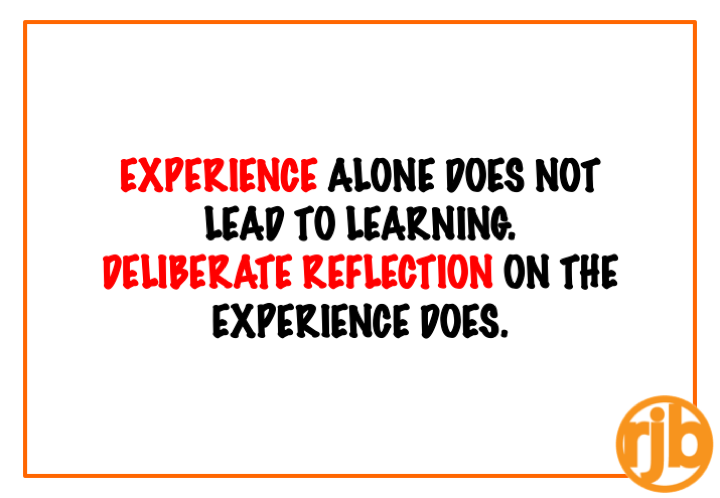
According to Wikipedia, reflective practice (RP) is the ability to reflect on one’s actions so as to engage in a process of continuous learning. RP involves paying critical and deliberate attention not only on past actions and events, but is taking a conscious look at emotions, experiences, actions, and responses, and using that information to add to his or her existing knowledge base and reach a higher level of understanding which will lead to developmental insights.
I find this to fall short in explaining what RP is because it only involves the present and past domain but not of the future.
At this juncture, you must be saying to yourself “How can you reflect on the future? It sounds like an oxymoron!”
Well, yes and no. Yes, if you are looking at reflection in its purest sense of the word. And No if you are taking reflection in its context. Contextually, reflection is contemplation. It involves looking at something that bounces off some form of surface or platform. It has a connotation of relating what you ‘see’ to yourself. And in this instance that you can reflect on your future by bouncing a notion to yourself regarding a future state. An example would be reflecting on your values and idealism within a contemplation sphere of what might be. This might involve reflecting on a question such as “What would your ideal day look like?” This kind of RP can be really powerful especially in designing a future state; personal growth tool.
This will fit in nicely with the Kolb’s Experiential Learning Cycle where there is an element of future state in it.
Therefore, RP covers the three domain of what we call the ownership model of Past, Present and Future.
Conventional wisdom says that we should start the year with some goals or resolutions. I have a different take. I say we should start and end the year with reflection. Only when we have undergone our reflective practices should we start setting a goal and then start the planning with the goal/end in mind as we design our action plan.
Sometimes, reflection is done in the most deliberate of ways like a guided journal page or gong through a set of questions or even facilitated sessions. Sometimes, reflection happens at the spur of the moment; impromptu. Which ever way you arrive, what is important is that you reflect. Recently, in my recent family vacation, a pleasant reflective moment happened in the sweetest and gentlest of ways.
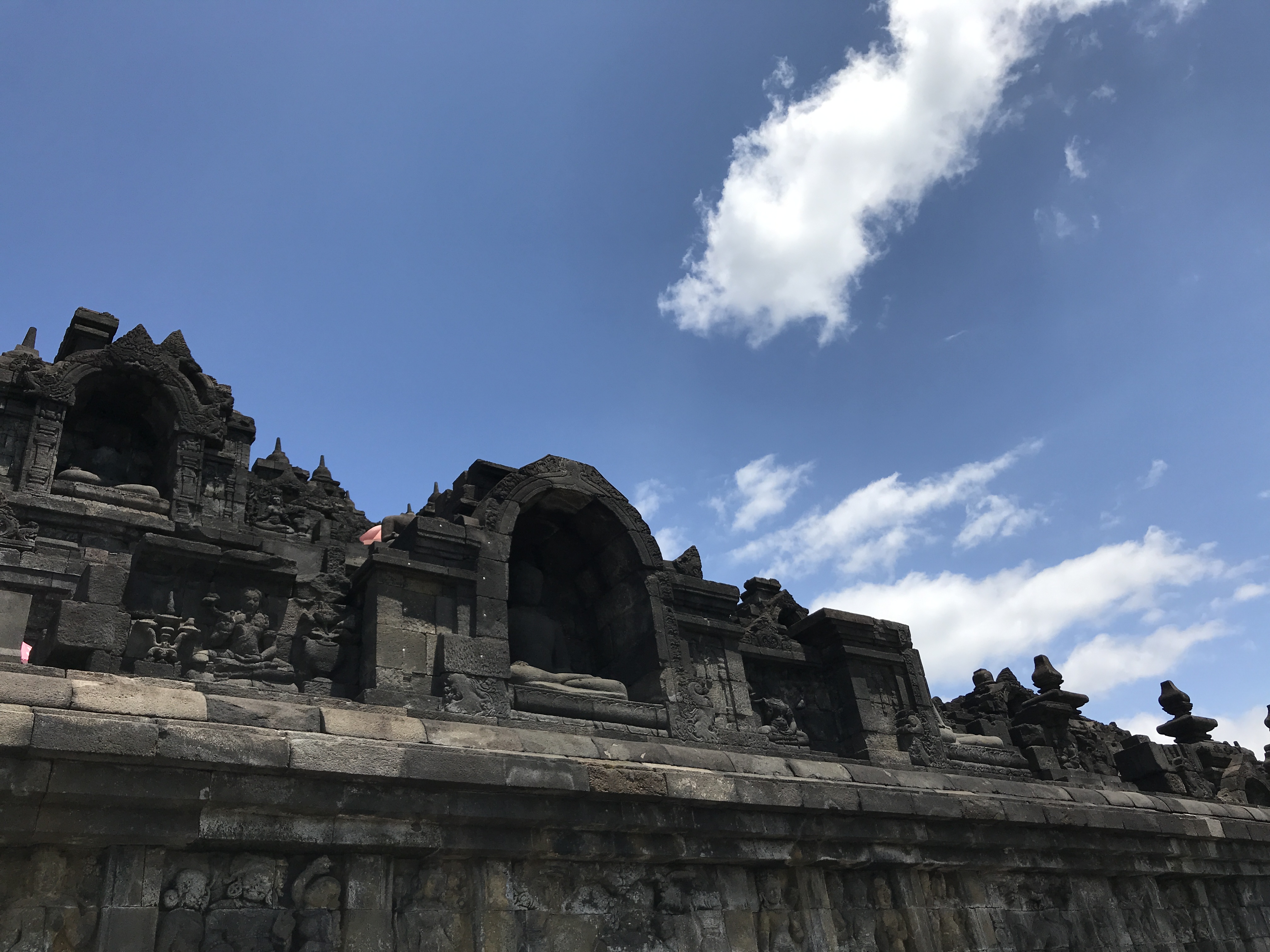
During my recent visit to Yogyakarta, Indonesia to visit the Borobudur, I also took in a private museum by the name of Ullen Sentalu in Kaliurang, Yogyakarta. It is a museum dedicated to the life and times of the royal family of Yogyakarta. In the many exhibits, housed in quaint little rooms made of Mount Merapi lava rocks, was a room dedicated to about 29 letter written by cousins, nephew and relatives of a particular princess by the name of Tineke. These hand written letters in Dutch was wall mounted with translations of the text displayed below those images. These letters were written to console Tineke that was recently heartbroken. Isn’t it a gentle, sweet notion?
Among the letters, there was one in particular that struct me to be very unique in its approach of consoling. The content invites Tineke to reflect, be forward looking and be in action. This was done in a most gentle way.
I find the series of reflective questions to be useful even for me; even till now. It has an almost meditative chant to it.
Let me reproduce the letter below and hope that you could also use them to reflect as we plan ahead for our 2019.
Yth sepupu,
Ada baiknya melihat ke dalam hati sendiri, Sejenak sebelum tidur Apakah dari pagi hingga malam tidak sebuah hatipun? Apakah kamu tidak membuat mata orang menangis? tidak memberi kesusahan kepada seseorang? Atau apakah kamu telah mengatakan kata-kata penuh kasih kepada orang-orag yang tidak punya kasih sayang?
Lessons from a trip to Borobudur as reminders for 2019.
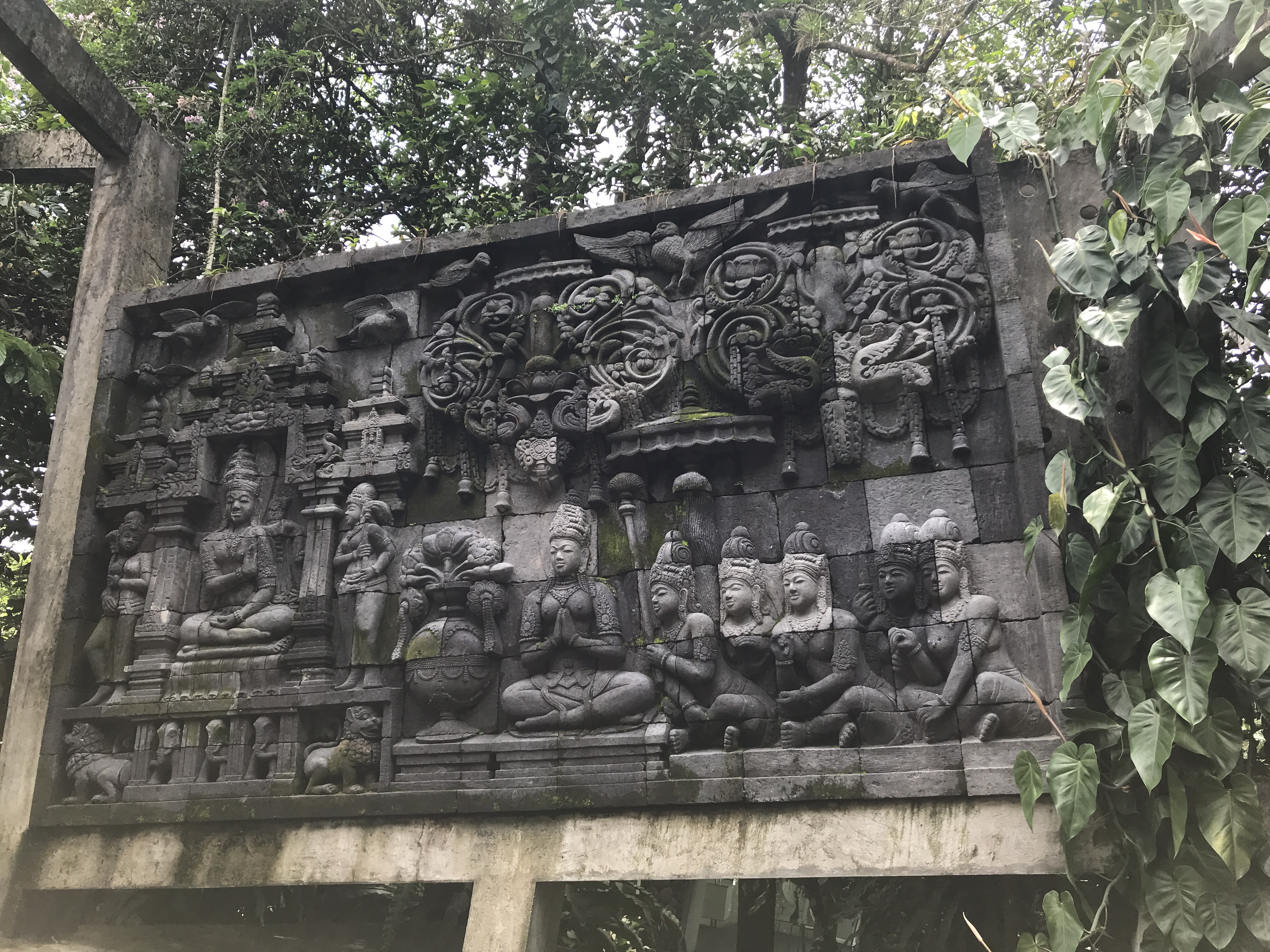
As I end my 2018, a few very powerful lessons presented itself to me as a beginning for 2019. How ironic it is as nostalgia sets in, euphoria comes with it too! That is the nature of duality; just like what I learnt today from a tour guide at Borobudur (by the name of Pak Agus) that the Añjali Mudrā (namaste) hand gesture symbolises two haves coming together – Mon & Sun, Day & Nite, Male & Female – besides the normal sign of respect. This is the first lesson/reminder for me as I embark into my 2019; to embrace the duality of things for both are one. One is not better than the other. One makes the other better.
The second lesson that will influence my 2019 is another lesson that was imparted by the same Pak Agus about the one of Buddha’s Mudras (hand gestures); the Vitarka. It is the hand gesture that evokes the energy of teaching and intellectual discussion or argument. It is made with the palm facing outward at chest level, with the tip of the thumb touching the tip of the index finer. The three fingers denotes the three steps to learning/teaching/understanding – 1st listen, then observe only than speak! How appropriate to what I have decided to do more of in 2019 – facilitating and coaching. So, the principles of coaching is not new at all. They are rooted centuries ago!
The third lesson that will accompany me into 2019 is the three platforms of Borobudor. The first is Karma. At this level, we gather knowledge. Here we learn about the knowledge of life such as good and evil, cause and effect, life and death, happiness and sadness etc. The second is Dharma. At this level, we reflect. This is the reflection stage. Reflecting on life; what we have done and what is being done. With reflection, wisdom is attained. The third and last level if Nirwana or enlightenment. Here is where we are introduced to the concept of Nothing & Everything; we as human being are truly nothing and at the same time we are everything there is! In 2019, I shall continue to seek knowledge and embark on learning journeys, constantly and deliberately practice reflection in my quest for enlightenment. I shall also design these phases into my training design.
The forth lesson that will affect my 2019 is this article itself! By writing and publishing this article, I have completed the last of my 2018 personal goals. It is a personal proof and reminder that new year resolutions to come true contrary to the many cynical POV that new year resolutions are hopeless and a waste of time.
I have always had an uneasy relationship with the phrase “Practice Makes Perfect”. On one hand it makes sense while on the other there is something I feel missing in the statement.
I am not alone in this based on the different iteration on this phrase because there is common wisdom that says there is no such thing as perfect and that perfection is so, so arbitrary. This school of though produces modified versions of the phrase such as “Practice makes Good” or “Practice makes Progress”.
Personally, I find the word perfect in the phrase must be read within the context of there is no perfection such that what the phrase now means is that we need to keep on practicing towards perfection even though perfection will never be attained. This fits well into the concept of Mastery where the attained level is never based on the practitioner but is the determined by factors outside of him, especially by his peers. If that is the case, the practitioners concern is never the attainment of perfection but the recognition by his peers. In this scenario, the phrase can be written as “Practice Makes Masters” or “Practice Produces Masters”or “Practice Path to Mastery”
Another modification to the popular phrase that I also enjoy is that there is a second part to the phrase that is seldom mentioned. In this case, the phrase is “Practice makes perfect therefore, be careful what you practice!” This particular one is a favourite of mine because it surfaces awareness of what we are practicing and suddenly we become selective in what we want to practice.
This leads to another favourite addition of mine. This time the phrase is modified to become “Deliberate practice makes masters”. I find this to be the one that encompasses the best of all the concepts. In addition to all the goodness of all the above, it also add onto it an element of reflective learning where the practice is deliberately looked at so that learning and wisdom can be extracted so that the progress towards mastery is more effective.
This chain of thought is an example of that wonderful learning I call spiral learning; where you take a concept and start adding onto it other concept and context so that clarity, wisdom, realisation and understanding is achieved.
I love playing games, be it board games, card games or online games. They are not just good to past time and create bonding, games are also great way to learn and reflect because of its immersion factor.
In Monopoly Deal, there are 3 places where cards can be played during a turn:
A player can place money cards or action cards (rent, house, hotel, force deal, pass go, etc) face up in their bank.
A player can play property cards face up in front of them in their property section.
A player can play action cards in the middle discard pile.
No.1 and No.2 are basically investments you make while No.3 is action that you can take to realise your investment or increase it.
Money can be put into the bank for later use (as an investment) by using the money card or by converting the action card into money. This is also true in life. We can withdraw what we put in and it doesn’t have to be just money. We can also put in our own life action card as an investment that we can withdraw later. Our life action cards can be help or favour or advice that we give to others. These kind of actions will increase our deposit into our emotional bank account. This kind of investment is usually overlooked because it is intangible. However, many a times, this is the kind of investment that produces the biggest profit in life. These kind of investment produces interests in terms of trust, credibility, closeness, reliability, dependability, love, care and many more powerful connectors.
Another investment you can make is by putting the property card into your property pile to be used later. This is again a straight forward reminder to us all that what we put in will be paid in kind.
However, in Monopoly Deal, any cards you have in your hand can’t be used. It is considered inactive. Just like life, anything you have that is inactive (no energy is put into it) it becomes dormant and is of little use except as a reminder to the fact that you have it and yet are not doing anything with it.
Maybe we should start looking at investment in more than just one way, a lesson learnt from Monopoly Deal.





 akar setempat, akal sejagat